Choosing Durable Carpet Tiles for Offices in Milton Keynes
September 11, 2026
How Different Industries Benefit from Commercial Carpet Tile Solutions
October 22, 2026
A well-maintained office floor can stay useful and attractive for many years. However, even the best flooring needs regular care. Daily foot traffic, office chairs, dirt, spills, and furniture can all affect carpet over time. For businesses using commercial carpet tiles, a clear maintenance plan can help protect the floor and reduce avoidable damage.
Carpet tiles are popular in many workplaces because they are practical and flexible. Individual tiles can often be replaced when a small area becomes badly worn or stained. Still, good care remains important. Regular cleaning can help preserve the look and feel of the floor.
This guide explains how to care for commercial carpet tiles. It covers daily cleaning, stain removal, deep cleaning, inspections, repairs, and long-term planning.
Why Regular Carpet Tile Maintenance Matters
Office flooring receives constant use. Staff walk across the same areas every day. Visitors add more traffic near reception spaces. Chairs can also create repeated wear around desks.
Without regular care, dirt can build up in the carpet fibres. Small spills can become harder to remove. High-use areas may also start to look different from quieter parts of the office.
A planned cleaning routine helps manage these issues. It also makes it easier to spot problems before they become more serious.
Good maintenance can help with:
- Keeping carpet tiles looking cleaner
- Removing dirt before it becomes embedded
- Managing stains and spills
- Identifying worn areas
- Protecting busy walkways
- Reducing the need for early replacement
- Keeping the workplace presentable
Maintenance does not need to be complicated. The key is to use the right method at the right time.
Create a Simple Cleaning Schedule
A cleaning schedule should reflect how the office is used. A busy reception area needs more attention than a private office. Corridors also tend to collect more dirt because people use them throughout the day.
It is better to clean high-traffic areas often than to wait until the floor looks dirty. Regular vacuuming can remove loose dirt before it moves deeper into the carpet.
When planning carpet tile maintenance, consider the following:
- Daily traffic levels
- Number of office users
- Visitor numbers
- Entrance conditions
- Food and drink areas
- Seasonal changes
- Furniture movement
- Existing cleaning resources
A simple schedule can divide cleaning into daily, weekly, and periodic tasks.
Daily tasks
Daily care should focus on visible dirt and spills. Busy entrances may need vacuuming every day. Spills should also be treated as soon as they happen.
Weekly tasks
Weekly cleaning can cover less busy areas. It can also include a closer inspection of walkways, desk areas, and meeting rooms.
Periodic tasks
Deeper cleaning should be planned based on traffic and manufacturer guidance. The correct method can vary between products, so always follow the care instructions for the installed tiles.
Vacuuming Commercial Carpet Tiles
Vacuuming is one of the simplest ways to care for office carpet tiles. It removes loose dirt, dust, and other particles from the surface.
However, the quality of the vacuuming routine matters. High-use areas may need more frequent cleaning. The machine should also be suitable for commercial carpet.
Pay particular attention to:
- Main entrances
- Reception areas
- Corridors
- Areas around desks
- Spaces near kitchen facilities
- Routes between meeting rooms
- Areas used by visitors
Move the vacuum slowly enough to collect loose dirt properly. Avoid rushing through heavily used sections.
Regular vacuuming can also help reduce the amount of grit that works into the fibres. This matters because trapped dirt can contribute to wear when people walk over it.
Deal With Spills Quickly
Spills are common in offices. Coffee, tea, water, food, and other drinks can all reach the floor. A quick response can make a major difference.
The longer a spill remains on a carpet tile, the more difficult it may become to remove. Rubbing can also push the liquid deeper into the fibres.
A simple response can include:
- Remove any solid material carefully.
- Blot the liquid with a clean, absorbent cloth.
- Work from the outside of the spill towards the centre.
- Use a suitable cleaning product if required.
- Follow the manufacturer’s instructions.
- Allow the area to dry fully.
Avoid aggressive scrubbing. It can damage the pile and spread the stain.
If a cleaning product is needed, test it according to the manufacturer’s guidance. Different fibres and backing systems may react differently to cleaning chemicals.
Protect High-Traffic Areas
Some parts of an office will always receive more use. These areas deserve extra attention.
Entrances are a common example. Outdoor dirt and moisture can enter through doors. Without suitable entrance protection, this material can quickly spread across the floor.
Useful measures include:
- Keeping entrance areas clean
- Using suitable entrance matting
- Checking mats regularly
- Vacuuming busy routes more often
- Cleaning spills without delay
- Inspecting worn sections regularly
Desk areas can also need extra care. Office chairs move repeatedly across the same section of flooring. If tiles are not designed for this type of use, wear may appear sooner.
Choose Cleaning Products With Care
More cleaning product does not mean better cleaning. In some cases, using too much product can leave residue. This residue may attract more dirt.
Always check the carpet tile manufacturer’s care instructions before using a new cleaning solution. The recommended product may depend on the fibre, backing, and construction.
When reviewing a cleaning product, check:
- Whether it is suitable for carpet
- Whether it is suitable for the specific fibre
- Recommended dilution
- Application method
- Rinsing requirements
- Drying time
- Safety instructions
Avoid using household products without checking their suitability first. A product that works on another surface may not be appropriate for commercial carpet.
Schedule Professional Deep Cleaning
Routine vacuuming is important, but it may not remove all embedded dirt. Over time, deeper cleaning may be required.
The frequency will depend on the office. A high-traffic workplace may need more frequent professional cleaning than a small office with light use.
Deep cleaning can help address:
- Embedded dirt
- Heavy traffic marks
- Stubborn stains
- General build-up
- Areas that look dull
- High-use routes
The cleaning method should suit the carpet tile. Excess moisture can create problems if the floor is not dried correctly. Therefore, professional cleaning should follow the manufacturer’s recommendations.
Businesses looking for suitable flooring information can also review commercial carpet tiles when considering product choice and maintenance needs.
Inspect Carpet Tiles Regularly
Cleaning is only one part of good floor care. Regular inspections can help identify changes in the flooring.
Look for signs of wear during routine cleaning. Small problems are often easier to manage than larger areas of damage.
Check for:
- Loose or lifting tiles
- Frayed edges
- Permanent stains
- Flattened pile
- Damaged backing
- Colour changes
- Moisture problems
- Uneven sections
An inspection can be quick. It does not need to interrupt the working day. Cleaning teams can report problems as they find them.
Early action may prevent a small issue from affecting nearby tiles.
Replace Damaged Tiles When Needed
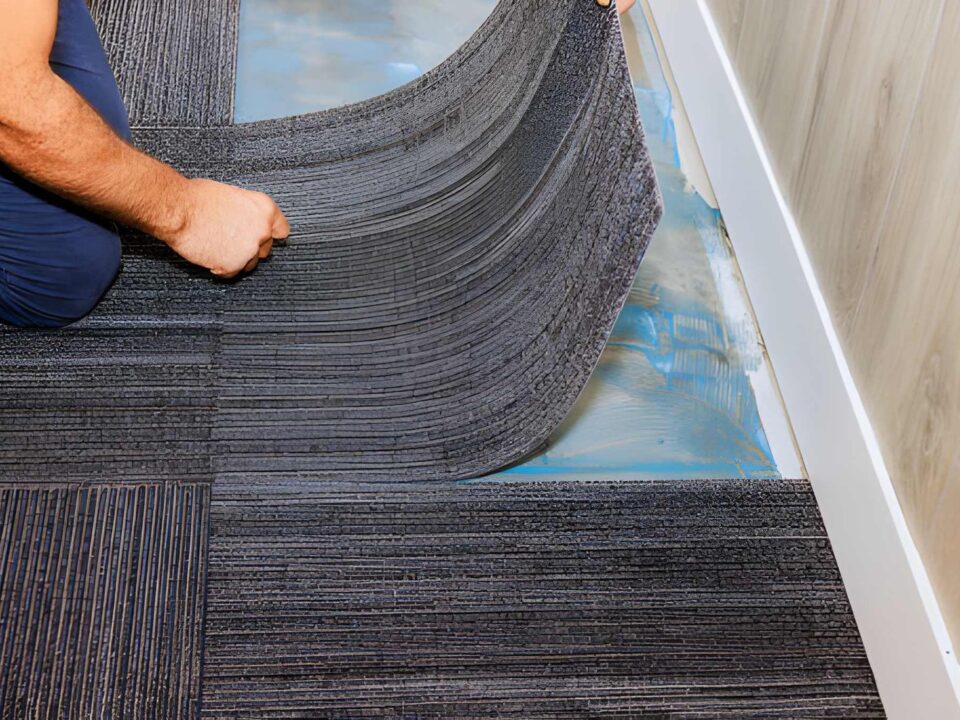
One major benefit of carpet tiles is their modular format. If a particular tile becomes badly damaged, it may be possible to replace that tile rather than the entire floor.
This can be useful in offices where spills or wear affect only small areas.
Before replacing a tile, check:
- Whether cleaning can restore it
- Whether the damage affects the backing
- Whether the tile is loose
- Whether a matching spare is available
- Whether the replacement follows the original layout
Keeping spare tiles after installation can make future repairs easier. Store them in a clean and dry location. Keep product information with them as well.
Matching can become harder if a product is discontinued. Having spare tiles from the original installation can therefore be useful.
Manage Furniture Carefully
Furniture can cause damage when it is dragged across carpet tiles. Heavy desks, cabinets, and chairs can place pressure on the flooring.
When furniture needs to move, use suitable methods to reduce stress on the tiles. Avoid dragging heavy items directly across the floor.
Simple precautions include:
- Plan furniture moves before starting
- Lift items where practical
- Use suitable moving equipment
- Check the floor after furniture is moved
- Replace displaced tiles promptly
- Avoid leaving heavy items on damaged sections
Office layouts can also change over time. Regular moves may expose areas that have received little traffic. They can also reveal differences in wear across the floor.
Check Areas Around Office Chairs
Desk chairs deserve special attention. Their wheels can move across the same small area many times each day.
When selecting or maintaining office flooring, check whether the carpet tile is suitable for castor chair use. The manufacturer’s specification should provide guidance.
Chair movement can lead to visible wear when the floor is not suited to the application. It may also create pressure around desk areas.
Where wear is developing, review:
- Chair type
- Wheel condition
- Carpet tile specification
- Frequency of chair movement
- Condition of the affected tiles
- Possibility of replacing worn sections
This approach can help identify the cause rather than treating the visible wear alone.
Keep Entrance Areas Clean
Entrances often have the highest risk of dirt and moisture. People bring material in from outside on their shoes. Wet weather can make the problem worse.
A clean entrance can reduce the amount of dirt that reaches the main office floor.
A useful entrance care routine includes:
- Vacuuming regularly
- Checking entrance mats
- Removing visible dirt quickly
- Treating moisture promptly
- Checking nearby tiles for wear
- Increasing cleaning during poor weather
Entrance matting should also be kept clean. A dirty mat cannot work as effectively as a clean one.
Use Local Flooring Advice When Needed
Some maintenance problems need more than routine cleaning. Loose tiles, damaged backing, repeated staining, and widespread wear may require professional advice.
Businesses comparing flooring contractors milton keynes should look at the type of work offered and whether the contractor understands commercial flooring requirements.
Professional advice may be useful when:
- Damage keeps returning
- Tiles are lifting
- The subfloor may have an issue
- A large area shows wear
- Matching replacement tiles are difficult to find
- The correct cleaning method is unclear
Getting the cause right can help avoid repeated repairs.
Understand When Carpet Tiles Need Attention
Not every mark means the floor needs replacing. Some problems can be managed through cleaning. Others may need a single tile to be replaced.
A useful way to assess the condition is to consider the extent and cause of the problem.
| Problem | Possible response | Priority |
| Loose dirt | Vacuuming | Routine |
| Fresh spill | Prompt spot cleaning | High |
| Heavy soiling | Deeper cleaning | Medium |
| Permanent stain | Assess or replace tile | Medium |
| Loose tile | Inspect and refit | High |
| Damaged backing | Replace tile | High |
| Widespread wear | Review flooring condition | Medium |
| Moisture issue | Find and address cause | High |
The table is a guide rather than a replacement for manufacturer instructions. The correct response will depend on the flooring product and the cause of the problem.
Keep Maintenance Records
Good records can make long-term flooring care easier. They give cleaning teams and building managers useful information about the installed product.
Keep records of:
- Product name
- Colour and design
- Installation date
- Supplier details
- Cleaning instructions
- Warranty information
- Replacement tile details
- Previous repairs
- Deep cleaning dates
These records can help when staff change or when repairs are needed several years after installation.
They can also prevent uncertainty about which cleaning products or methods should be used.
Plan Maintenance Around Office Use
Cleaning should not create unnecessary disruption. Offices often need to remain operational, so maintenance may need to fit around working hours.
A clear plan can reduce inconvenience. It can also give cleaners enough time to complete the work properly.
Consider these practical points:
- Schedule noisy work outside busy periods.
- Clean high-use areas at suitable times.
- Allow enough drying time.
- Keep wet areas clearly marked.
- Move furniture only when necessary.
- Communicate planned deep cleaning in advance.
Good planning is especially useful for large offices. It can allow work to be completed in sections rather than closing the whole floor.
Consider the Wider Flooring Plan
Maintenance begins before the flooring is installed. Choosing a suitable product can make future care easier.
Different areas may have different demands. Reception spaces, corridors, workstations, and meeting rooms do not always experience the same traffic.
A sensible flooring plan should consider:
- Expected foot traffic
- Cleaning needs
- Furniture use
- Office layout
- Future changes
- Replacement requirements
- Product availability
Information about carpets kettering may also be useful when comparing broader flooring considerations and commercial flooring requirements.
The aim is to select flooring that fits the space. Maintenance then becomes part of the wider plan rather than an afterthought.
Build a Long-Term Maintenance Routine
A good routine does not need to be complex. Consistency is more important than occasional heavy cleaning.
A simple long-term plan can follow these steps:
- Check the floor during regular cleaning.
- Vacuum according to traffic levels.
- Treat spills quickly.
- Inspect busy areas for wear.
- Arrange deeper cleaning when needed.
- Replace badly damaged tiles.
- Keep spare tiles in storage.
- Update maintenance records.
- Review the flooring condition each year.
This approach can help businesses stay ahead of small problems. It also gives cleaning teams clear tasks to follow.
When Should You Review the Whole Floor?
Individual repairs may be enough for many years. However, there may come a point when wider flooring work becomes more practical.
A review may be useful when large areas show similar wear. It may also be needed when the flooring no longer suits the way the office is used.
Look at:
- The age and condition of the flooring
- The number of damaged tiles
- Changes in office use
- Changes in furniture
- Cleaning performance
- Availability of matching replacement tiles
- Appearance across high-use areas
A whole-floor replacement should not be the first response to a small problem. A review helps determine whether local repairs remain practical.
Conclusion
Long-term carpet tile performance depends on regular care, quick spill treatment, suitable cleaning, and timely repairs. High-traffic areas need closer attention, while damaged tiles should be assessed before they affect nearby flooring. Keeping spare tiles and clear maintenance records can also make future repairs easier.
A suitable cleaning schedule should match the way the office is used. By combining daily care with regular inspections and planned deep cleaning, businesses can help their carpet tiles remain clean, practical, and suitable for everyday workplace demands.
Contact us for more info.
Frequently Asked Questions
1. How often should commercial carpet tiles be vacuumed?
The ideal frequency depends on traffic. Busy areas such as entrances and corridors may need daily vacuuming. Lower-use areas can usually follow a less frequent schedule.
2. What is the best way to clean a spill on a carpet tile?
Deal with spills as soon as possible. Remove solid material carefully, then blot the liquid with a clean cloth. Avoid vigorous rubbing and follow the manufacturer’s cleaning instructions.
3. Can a damaged carpet tile be replaced?
In many cases, yes. The modular design of carpet tiles allows individual sections to be replaced when they are badly stained or damaged. A matching spare tile can make replacement easier.
4. Do carpet tiles need professional cleaning?
Routine cleaning may not remove all embedded dirt. Professional deep cleaning can be useful when the flooring becomes heavily soiled. The cleaning method should match the manufacturer’s recommendations.
5. How can office carpet tiles be protected from heavy traffic?
Regular cleaning can help manage dirt and wear. Entrance matting can reduce outdoor dirt. Areas around desks and corridors should also be checked regularly for signs of wear.
6. Should spare carpet tiles be kept after installation?
Yes. Keeping spare tiles can be useful for future repairs. It may become harder to find an exact match if the original product is later discontinued.
7. When should commercial carpet tiles be replaced?
Replacement depends on the condition of the flooring. A few damaged tiles may only need local replacement. Widespread wear, repeated damage, or changes in office use may justify a wider flooring review.